
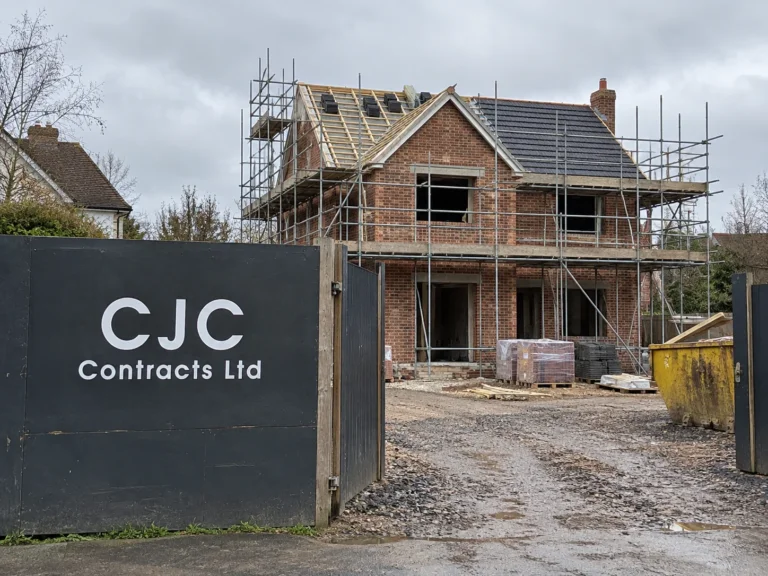
How Much Does It Cost to Build Your Own House? Self-Build vs Using a Contractor
November 13, 2026
What Is the Rebuild Cost of Your Home? How to Work It Out Properly
November 14, 2026
Building a typical two-storey, three-bedroom house in the UK costs roughly £186,000 to £260,000 for the construction alone if you use a main contractor. That is a 93 m² home (the national minimum size for a three-bed, five-person house) at the £2,000–£2,800 per m² that Homebuilding & Renovating quotes for the main contractor route, excluding VAT, which is normally zero-rated on a new home.
Once you add the plot, design fees, utility connections, external works and a sensible contingency, the all-in figure is usually much higher. Size, specification, ground conditions and how you manage the build all move the number, so use the figures below to plan a budget, not as a quote.
How big is a 3 bedroom house?
Floor area is the biggest single driver of cost, so start there. The Nationally Described Space Standard, which the Essex Design Guide reproduces, sets these minimum gross internal floor areas for two-storey houses:
| House type | Minimum floor area (two storeys) |
|---|---|
| 3 bedrooms, 4 people | 84 m² |
| 3 bedrooms, 5 people | 93 m² |
| 3 bedrooms, 6 people | 102 m² |
These are minimums. Many self-built and custom-built three-bed homes are larger, with a bigger kitchen-diner, a utility room or a study, and every extra square metre has to be paid for.
What does it cost per square metre to build a house?
The build route you choose changes the rate per square metre more than almost anything else. Homebuilding & Renovating’s 2026 build cost guide gives these ranges, excluding VAT:
| Build route | Cost per m² (ex VAT) |
|---|---|
| DIY (you do much of the work yourself) | £1,000–£1,600 |
| Self-managed (you hire and coordinate trades) | £1,600–£2,200 |
| Main contractor | £2,000–£2,800 |
| Design and build package | £2,300–£3,500 |
Build It magazine’s 2026 self-build budgets guide puts a typical self-build at £2,500–£3,000 per m², starting from about £2,200 per m² for a simple, self-managed design and rising above £3,200 per m² for high-end, intricately detailed homes. It also applies regional factors, with the South East at 104% of the rest-of-UK baseline.
For more on what sits behind those rates, see our guide to how much it costs to build a house in the UK.
So what would a 3 bedroom house cost to build?
Multiplying the main contractor rate by the three minimum sizes, plus a more generous 120 m² home, gives these construction-only budgets:
| Floor area | At £2,000/m² | At £2,800/m² |
|---|---|---|
| 84 m² | £168,000 | £235,200 |
| 93 m² | £186,000 | £260,400 |
| 102 m² | £204,000 | £285,600 |
| 120 m² | £240,000 | £336,000 |
Using Build It’s typical self-build range of £2,500–£3,000 per m², the same 93 m² house would come out at £232,500–£279,000. The spread is wide because specification, ground conditions and design complexity vary so much from one plot to the next.
What costs sit on top of the build price?
The figures above cover building the house itself. A realistic budget also has to include:
- The plot. Build It, citing NaCSBA’s market survey, says most building plots cost roughly £100,000–£299,000, and land prices vary widely by location.
- Design and professional fees. Homebuilding & Renovating suggests architect fees of 7–15% of build cost, a quantity surveyor at 1–3% and a project manager at 5–10% if you use one. These professional services are standard-rated for VAT unless they form part of a single design and build supply (HMRC VAT Notice 708).
- Planning and building control. The planning application fee for one new dwelling in England has been £610 since 1 April 2026, though the government has signalled further fee rises, so check the current figure before you apply. Building control charges vary by council: Colchester City Council’s schedule lists £1,125 including VAT for a new dwelling.
- Utility connections. Typically £10,000–£25,000, and more for rural plots that are further from the networks.
- Preliminaries and external works. Skips, welfare and muck-away are around 10% of construction cost, and landscaping, drives and paths around 15%.
- Warranty and insurance. Allow around 1% of build cost for each.
- Contingency. Homebuilding & Renovating suggests 10–15% including 5% for inflation; Build It advises around 20%.
Why does one 3 bed house cost more to build than another?
Two houses with the same floor plan can differ by tens of thousands of pounds. The main reasons are:
- Ground conditions. Foundations are typically 15–20% of the build cost. Homebuilding & Renovating says poor or contaminated ground can add 40–100% to foundation costs, a sloping site 25–40% and a high water table 20–35%. Clay soils, which are common in parts of Essex, need deeper foundations near trees, and NHBC Standards set minimum depths of 0.75–1.0 m depending on the clay’s shrink potential.
- Specification. A standard kitchen might cost £12,000–£16,000 against £35,000 or more for a top-end one. Gas central heating with radiators is quoted at £8,500–£13,500, while an air source heat pump with underfloor heating is £28,000–£40,000.
- Design complexity. Complicated footprints, split levels and intricate rooflines add cost to every trade.
- Regulations. The Future Homes Standard comes into force on 24 March 2027 and will raise the energy performance required of new homes.
A soil investigation before you finalise the design is the best way to avoid nasty surprises below ground. Our groundworks team deals with foundations, drainage and site preparation on new-build plots every week.
Is it cheaper to build a 3 bed house yourself?
Usually, yes, but you take on the risk. Homebuilding & Renovating estimates that self-managing can save 10–15%, and Build It notes that a main contractor’s profit and overheads are typically around 20%. In return you coordinate the trades, order materials, manage the programme and carry the cost of mistakes and delays. Lenders also want detailed costings, either a main contractor’s quote or a full breakdown of labour and materials, before they release funds. We compare the two routes in more detail in self-build vs using a contractor.
Frequently asked questions
Do you pay VAT on building a new 3 bedroom house?
A contractor’s work on a new dwelling, and the building materials they supply with it, are normally zero-rated under HMRC VAT Notice 708. If you build your own home, you can reclaim most VAT on eligible materials through the DIY housebuilders scheme, but you must claim within six months of completion.
Do I need planning permission to build a 3 bedroom house?
Yes. A new house needs planning permission and Building Regulations approval. The application fee for one new dwelling in England has been £610 since 1 April 2026; check the current fee with your council, as further increases are planned.
Is it cheaper to build or buy a 3 bedroom house?
It depends on your plot cost and local house prices. Add up the plot, the build, the fees and a contingency, then compare that total with what similar homes sell for nearby.
How much contingency should I allow?
Between 10% and 20% of the total budget, depending on how certain your design and ground conditions are. Older or awkward sites justify the higher end.
Need a builder in Essex or Suffolk?
CJC Contracts is a Colchester building and groundworks contractor, established in 2007 and based in Great Horkesley, working across Essex and Suffolk. We build new homes from the foundations up and can price your drawings properly so your budget rests on real figures. For a free quote, get in touch online or call 01206 273689.
Sources
- Homebuilding & Renovating: Build cost guide (updated 16 February 2026)
- Build It: How much does it cost to build a house in 2026?
- Essex Design Guide: Nationally Described Space Standards
- HMRC: VAT Notice 708, Buildings and construction
- GOV.UK: VAT refunds for DIY housebuilders
- Colchester City Council: Building control fees and charges
- Suffolk County Council: Planning fees for applications in England, April 2026
- NHBC Standards 4.2.7: Foundations in shrinkable soils


