

How Expensive Is It to Build a House? The UK Numbers Nobody Tells You Upfront
November 11, 2026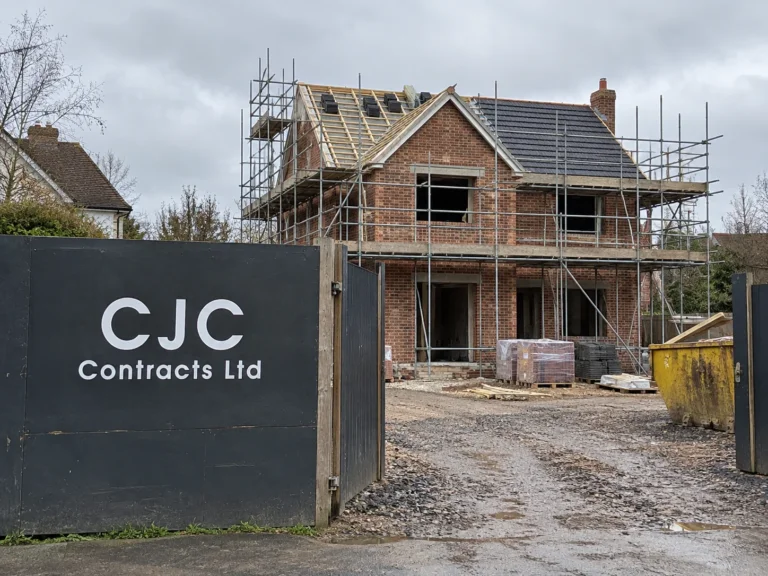
How Much Does It Cost to Build Your Own House? Self-Build vs Using a Contractor
November 13, 2026
Building a house in the UK in 2026 typically costs about £2,000 to £3,500 per square metre of floor area if you use a main contractor or a design-and-build firm. If you manage the trades yourself it starts from about £1,600 per m² (Homebuilding & Renovating, excluding VAT). For a 150 m² family home, that means roughly £300,000 to £450,000 for the build alone, before you’ve bought the plot. Where your project lands in that range comes down to seven things: size and shape, who builds it, the ground, the plot, how complex the design is, the construction method and specification, and the fees, taxes and timing around the build.
These are national guide figures to help you set a realistic budget. They aren’t a quote. Every plot is different, and the only reliable number is a priced estimate based on your drawings and site.
What does a house cost to build per square metre right now?
Homebuilding & Renovating’s 2026 build cost guide (updated February 2026) breaks costs down by how the project is delivered:
| Build route | Typical cost per m² (ex VAT) | What it means |
|---|---|---|
| DIY (you do much of the work) | £1,000–£1,600 | Biggest saving, longest build, most risk |
| Self-managed (you hire the trades) | £1,600–£2,200 | You run the programme and buy materials |
| Main contractor | £2,000–£2,800 | One firm builds it, so costs are more predictable |
| Design and build | £2,300–£3,500 | Turnkey service, with design fees included |
Build It magazine’s 2026 figures broadly agree. It puts the average self-build at £2,500–£3,000 per m², from around £2,200 for a simple, self-managed design to over £3,200 for high-end detailing. These rates cover the house itself. The plot, external works, service connections and professional fees usually come on top. We go through those line by line in our guide to how much it costs to build a house in the UK.
Which 7 things decide what your house will cost?
1. Size, and how simple the shape is
Floor area is the biggest multiplier, but the rate per m² isn’t fixed. Larger houses usually have a lower average cost per m², but only if the design stays simple. A complex footprint can add 15–25% to foundation costs, and a split-level design 20–30%. Even ceiling height counts: each extra 100 mm adds about 1.6% to the cost per m² for that storey (Homebuilding & Renovating). For scale, the nationally described space standard sets a minimum of 93 m² for a two-storey, three-bedroom, five-person home.
2. Who builds it: your procurement route
A main contractor’s price includes their overheads and profit. Build It estimates these at around 20%, so a 150 m² house might cost £375,000–£450,000 with a main contractor, compared with £300,000–£360,000 if you self-manage. Homebuilding & Renovating puts the saving from self-managing at 10–15%. Bear in mind that you then take on the programme, the risk and the gaps between trades. Hiring a project manager instead typically costs 5–7% of the build (Build It).
3. What’s under the ground
Foundations typically account for 15–20% of total build cost, and this is where budgets most often go wrong. Homebuilding & Renovating gives these rough uplifts: poor or contaminated ground can add 40–100% to foundation costs, a high water table 20–35%, and a raft instead of strip foundations 20–30%. Piling can roughly double the cost. On shrinkable clay, NHBC Standards set minimum foundation depths of 1.0 m, 0.9 m and 0.75 m for high, medium and low volume-change soils outside the influence of trees. Near trees they go deeper, and anything over 2.5 m needs an engineer’s design. A soil investigation costs from around £2,500 (Build It) and is the best money you’ll spend before committing. It’s the first thing our groundworks team asks to see.
4. The plot: slope, access and services
A sloping site can add 25–40% to foundation costs, and restricted access or a remote location 15–30%. Demolishing an existing house typically costs £10,000–£15,000. Utility connections are easy to underestimate: Homebuilding & Renovating suggests £10,000–£25,000, and Build It says £20,000–£30,000 for an edge-of-settlement plot, or far more if mains services are distant. If there’s no public sewer, a package treatment plant costs about £3,500–£7,500 plus £12,000–£18,000 to install. Plan your drainage early.
5. Design complexity, roofs and basements
Every corner, valley and change of level adds labour. Complex roofs need engineer’s calculations (typically £800–£1,200), and decorative or irregular tiles add 15–25% to roofing costs. Brickwork detail matters too: Flemish bond adds roughly 30–40% to bricklaying labour, and random stonework 40–50%. Basements are the biggest leap, costing 50–100% more per m² than above-ground space, and up to 200% more on tight sites (Homebuilding & Renovating).
6. Construction method and specification
Compared with traditional blockwork, a timber frame costs about 15–20% more for the structure, but that adds only 2–3% to the total build. Oak frame adds 7–8% to the total, and SIPs or ICF 2–4%, though they can be 20–30% quicker to build. Build It notes that the structural system is only about 25% of the total budget. Specification often moves the final figure more than the structure does. A mid-range kitchen might cost £5,000–£15,000 and a high-end one £30,000 or more. An air source heat pump averages around £13,700 installed. Building to Passivhaus standard costs roughly 20% more than minimum Building Regulations (Build It). Also check with your designer which energy standard your project will fall under: the Future Homes Standard comes into force on 24 March 2027.
7. Fees, taxes and timing
Fees add up quickly. Architects typically charge 7–15% of build cost, structural engineers £1,500–£3,000, and Building Regulations fees run to £1,000–£3,500. A structural warranty is about 1% of construction value (Homebuilding & Renovating). In England, a full planning application for one new dwelling costs £610 from 1 April 2026. Building a new home is usually zero-rated for VAT when a builder does the work, and self-builders can reclaim VAT on materials they buy through HMRC’s DIY housebuilders scheme. Timing matters too: BCIS forecasts tender prices rising 2.9% by the end of 2026 and 15.5% over the five years to mid-2031, so an estimate from two years ago is probably out of date.
What might a typical family home cost to build?
Using Build It’s 2026 benchmarks, before the plot:
| Example | Estimated build cost |
|---|---|
| 150 m² house, self-managed | £300,000–£360,000 |
| 150 m² house, main contractor | £375,000–£450,000 |
| 200 m² house, typical specification | £440,000–£600,000 |
On top of that you’ll need the plot, connections, fees and a contingency. Homebuilding & Renovating recommends setting aside 10% for contingency plus 5% for inflation. Build It suggests around 20% of the total budget. If you want the bigger picture first, read how expensive it is to build a house.
Does building in Essex or Suffolk change the cost?
National guides are a starting point, but local conditions decide the detail. Build It’s regional labour factors put the South East at 104% of the UK baseline and most other regions at 100%. One of its case studies, a timber-frame self-build in Suffolk, came in at £350,000, or £2,059 per m². The ground matters just as much. The British Geological Survey describes shrink-swell clay as one of Britain’s most damaging geohazards, so a soil investigation and an engineer’s foundation design are worth paying for before you fix your budget. Community Infrastructure Levy rules also vary by council. Self-builders can claim an exemption, but only if they apply before any work starts.
Frequently asked questions
How much does it cost to build a 3-bedroom house?
At the main-contractor rates above (£2,000–£2,800 per m²), a 93 m² three-bedroom home works out at roughly £186,000–£260,000 for the build, excluding VAT, the plot, external works and fees. Larger or higher-spec homes cost proportionally more.
Is building a house cheaper than buying one?
It can be, but it depends mostly on the price of the plot and how well you control the build cost. Build It’s survey data shows most building plots selling for £100,000–£299,000. Add the full build cost, fees and contingency before comparing with similar homes on the market.
Do you pay VAT when building a new house?
Building work on a new dwelling by a VAT-registered builder is normally zero-rated. If you buy materials yourself, you can reclaim the VAT through the DIY housebuilders scheme, but you must claim within six months of completion (GOV.UK). Professional fees such as architects’ fees normally carry VAT.
Get a realistic price for your build
CJC Contracts is a Colchester-based building and groundworks contractor, established in 2007 and based in Great Horkesley, working across Essex and Suffolk. We build new homes from the groundworks up, and can price your project from your drawings and site so you know where you stand before you commit. For a free quote, get in touch or call 01206 273689.
Sources
- Homebuilding & Renovating, “How much will it cost to build a house in 2026?” (Michael Holmes, updated 16 February 2026)
- Build It, “How Much Does it Cost to Build a House in 2026? Your Guide to UK Self Build Costs”
- NHBC Standards, 4.2.7 Foundations in shrinkable soils and 4.2.8 Design and construction of foundations in shrinkable soils
- British Geological Survey, “Maps show the real threat of climate-related subsidence to British homes and properties” (May 2021)
- BCIS five-year forecast, reported by Specification Online (30 June 2026)
- Essex Design Guide, nationally described space standard (minimum gross internal areas)
- Suffolk County Council, Planning fees for applications in England, April 2026
- GOV.UK, VAT: digitisation of claims and extending time limit for DIY Housebuilders Scheme
- Southend-on-Sea City Council, CIL self-build exemption (whole house)


